

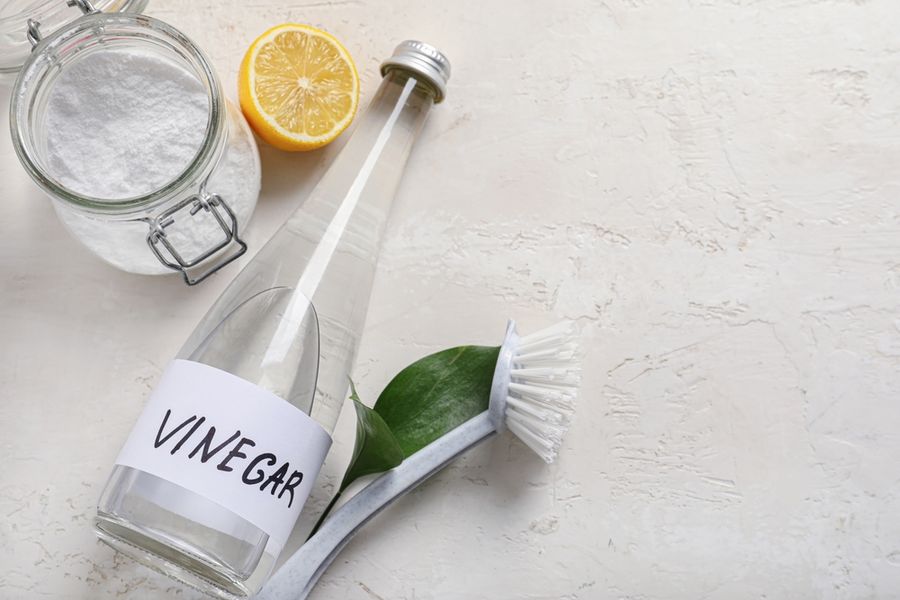
Natural cleaning products can be pricey, but there’s a powerful multitasker sitting in most kitchen cabinets already: plain white vinegar. It’s simple, affordable, and surprisingly effective at tackling odors, buildup, and grime all over the house. Vinegar works especially well on hard water deposits and everyday messes, making it a go-to for busy households. With a few smart uses (and a couple important safety rules), this humble ingredient can replace a whole shelf of cleaners.
Make an All-Purpose Spray for Everyday Messes
Vinegar is a strong base for a simple all-purpose cleaner that works on many sealed surfaces. Mix equal parts white vinegar and water in a spray bottle for a go-to solution you can use on kitchen counters, bathroom sinks, and sticky fingerprints on cabinets. Add a few drops of unscented dish soap for extra grease-cutting power.
Use a microfiber cloth for the best results and wipe surfaces dry to avoid streaks. Vinegar is acidic, so it’s not ideal for every material, but for quick daily wipe-downs, it’s hard to beat. It also helps neutralize lingering smells, which makes your home feel cleaner even when you’re short on time.
Dissolve Hard Water Buildup on Faucets and Showerheads
If you live in a hard water area, vinegar is basically a cheat code. Mineral deposits build up around faucets, showerheads, and handles, leaving that cloudy, crusty look behind. Vinegar breaks down that buildup without harsh fumes or heavy scrubbing.
For faucets, soak a paper towel in vinegar and wrap it around the affected area for 30 to 60 minutes. Then wipe and rinse. For showerheads, fill a plastic bag with vinegar and secure it around the showerhead with a rubber band. Let it sit for a few hours, then run hot water through it. Your water flow improves, and everything looks brighter with minimal effort.
Freshen Drains and Tackle Minor Clogs Naturally
Vinegar can help with slow drains and funky sink smells, especially in kitchens and bathrooms. A simple routine helps break down gunk before it becomes a full clog. Start with a pot of hot (not boiling) water to loosen buildup, then add baking soda, followed by vinegar. The fizzing action helps lift residue.
Let the mixture sit for 10 to 15 minutes, then flush with more hot water. This method works well for minor clogs and odor control, but it won’t replace a plumber for serious blockages. Used once a week or every other week, it’s a great way to keep drains running smoothly without pouring harsh chemicals down the pipes.
Deodorize Rooms, Fridges, and Trash Cans
Vinegar is excellent at neutralizing odors instead of just covering them up. If a room smells stale, set out a small bowl of vinegar overnight and let it absorb the odor. It’s especially helpful after cooking fish, frying food, or dealing with musty smells in a closed-up space.
In the fridge, wipe down shelves with a diluted vinegar solution to remove lingering food smells. For trash cans, spray the inside with vinegar and water, scrub if needed, then rinse and let it dry completely. Vinegar can also help remove that sour odor from dishcloths and sponges—just soak them in warm water with a splash of vinegar, then rinse well.
Upgrade Your Laundry Routine With Vinegar
Vinegar is a quiet hero in the laundry room. It helps soften fabrics, reduce static, and remove leftover detergent residue that can make clothes feel stiff. Add about half a cup of white vinegar to the rinse cycle as a natural fabric softener alternative.
It’s also helpful for brightening dingy whites and removing mildew smells from towels. If your washing machine has hard water buildup, running an empty hot cycle with vinegar once a month can help keep it cleaner and working efficiently. Vinegar won’t make your clothes smell like salad dressing, as the scent rinses out. The result is fresher laundry, fewer odors, and less reliance on heavily fragranced products.
Use Vinegar to Handle Pests and Outdoor Grime
Vinegar can help with a few common household pests, especially fruit flies and ants. For fruit flies, set out a small dish of vinegar as a trap. They’re drawn to the smell and get stuck, which is a simple fix when a kitchen gets a little too ripe.
For ants, vinegar works as a natural deterrent because it disrupts scent trails. Spray a 50/50 vinegar-water mix along baseboards, windowsills, and entry points. Outdoors, vinegar can also be used to help kill weeds in cracks of patios or driveways. It’s best for small areas and spot treatment, not large garden spaces. Always use caution around plants you want to keep.
A Few Smart Rules Make Vinegar Even More Powerful
Vinegar earns its place as one of the most useful natural cleaners around the house. It can deodorize, dissolve mineral buildup, freshen laundry, and handle grime in a way that’s budget-friendly and easy to keep on hand. Once you get used to using it, you’ll probably start reaching for it before anything else.
The most important part is using it safely. Never mix vinegar with bleach, ammonia, or hydrogen peroxide, since dangerous chemical reactions can occur. Avoid combining vinegar and baking soda in a closed container as well, because pressure can build up. Stick to simple mixtures, rinse surfaces when needed, and vinegar will stay one of the safest and most effective cleaning tools in your home.