

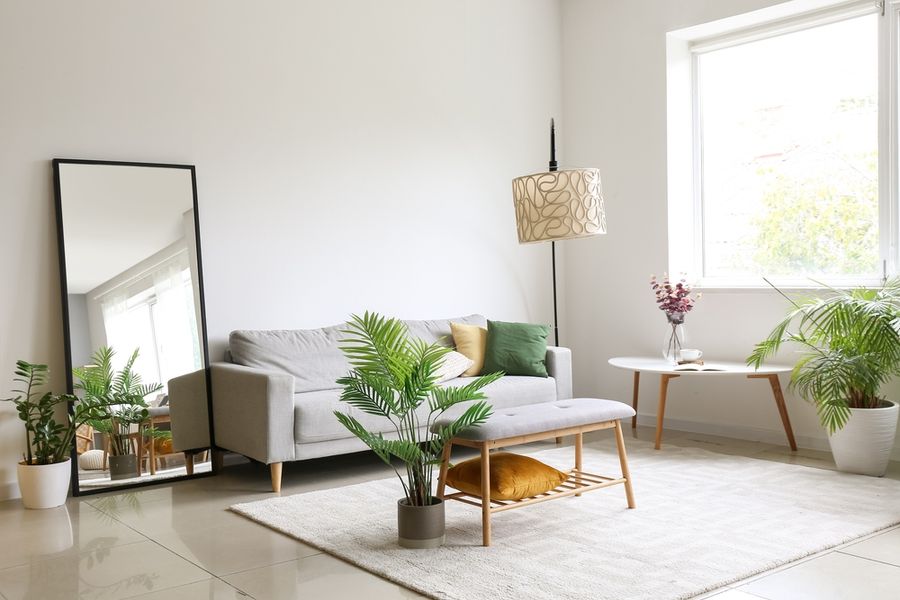
Small rooms can feel cozy and functional, but they can also start to feel cramped when furniture, décor, and lighting aren’t working together. The good news is that a space doesn’t need a renovation to feel more open. A few strategic design choices can change how a room looks and feels almost instantly. By adjusting color, scale, light, and layout, even a modest room can feel brighter, taller, and far more spacious.
Use Mirrors to Reflect Light and Expand the View
Mirrors are one of the most effective ways to make a room feel bigger without structural changes. A mirror reflects both light and space, creating an optical illusion of depth. Placing a mirror across from a window helps bounce natural light around the room, making it feel brighter and more open.
Oversized mirrors tend to have the strongest effect, especially when placed in entryways, living rooms, or bedrooms. A large mirror can also function like artwork, adding style while improving the room’s visual size. Even in narrow hallways or tight corners, mirrors can reduce the boxed-in feeling and make the space feel more breathable.
Choose Wall Colors Based on Natural Light
Paint color has a major impact on perceived space, but the “always paint it white” rule doesn’t work for every room. A space with plenty of natural light often looks larger with lighter tones because the light bounces around more easily. Soft whites, warm creams, and pale greiges can make bright rooms feel airy and expansive without looking stark.
Rooms with very little natural light sometimes benefit from deeper, richer colors instead. A moody navy, deep green, or charcoal can create depth that makes the walls feel farther away, while also adding warmth and coziness. The key is choosing a tone that matches the room’s lighting, rather than forcing a light shade that ends up looking flat and dull.
Let Furniture “Breathe” Instead of Crowding the Walls
Pushing every piece of furniture tight against the walls can actually make a room feel smaller. When furniture is crammed into corners, it creates the impression that there isn’t enough space for anything to fit comfortably. Leaving even a few inches between the sofa and the wall can make the layout feel more intentional and open.
Creating clear walkways matters just as much. A room feels bigger when movement through it is easy and natural. Aim for pathways between seating, tables, and doorways so the space doesn’t feel blocked. Even in a small room, thoughtful spacing can create a calmer, less cluttered look that reads as larger.
Use the Right Furniture Scale for the Space
It’s tempting to choose the smallest furniture possible in a small room, but that approach often backfires. Tiny furniture can make a room feel awkward, incomplete, and visually chopped up. A normal-sized sofa, properly scaled bed, or appropriately sized dining table tends to make a space feel more grounded and cohesive.
The goal is balance rather than minimalism. Avoid oversized sectionals that dominate the room, but don’t default to miniature pieces either. A few well-chosen, properly proportioned items usually look better than many small items competing for attention. When the scale feels intentional, the room looks more polished and spacious.
Hang Curtains Higher to Make Ceilings Feel Taller
Curtains can dramatically change how tall a room feels. Hanging a curtain rod too low makes the ceiling appear shorter, and the window appear smaller. Mounting curtain rods higher (closer to the ceiling) draws the eye upward and creates the illusion of height.
Long curtain panels that extend closer to the floor also contribute to a taller, more elegant look. Light-filtering fabrics allow natural light to brighten the room while still offering privacy. Even if the window itself is small, properly hung curtains can make it feel larger and more dramatic, which instantly expands the overall look of the space.
Go Bigger With Rugs and Large-Scale Art
One of the most common small-room mistakes is choosing décor that is too small. A tiny rug floating in the middle of a room can make the space feel disconnected and cramped. A larger rug anchors the furniture and creates a sense of cohesion, making the room feel more expansive. Ideally, the front legs of sofas and chairs should sit on the rug to unify the layout.
Large-scale art works the same way. One oversized piece can create a bold focal point and give the eye a place to rest. Smaller, scattered artwork can feel cluttered and visually busy. Bigger design elements tend to make rooms feel grander, even when square footage is limited.
Small Shifts That Change the Whole Room
Making a room feel bigger often comes down to visual balance. Paint colors that suit the lighting, furniture that feels properly scaled, and décor that isn’t too small can all shift the room’s proportions. Curtains hung high, larger rugs, and oversized art create height and structure, while mirrors reflect light and add depth.
The biggest difference usually comes from combining several small changes rather than relying on one dramatic fix. When layout, lighting, and scale work together, the room feels calmer, brighter, and far more open. A space that feels intentional almost always feels larger.