

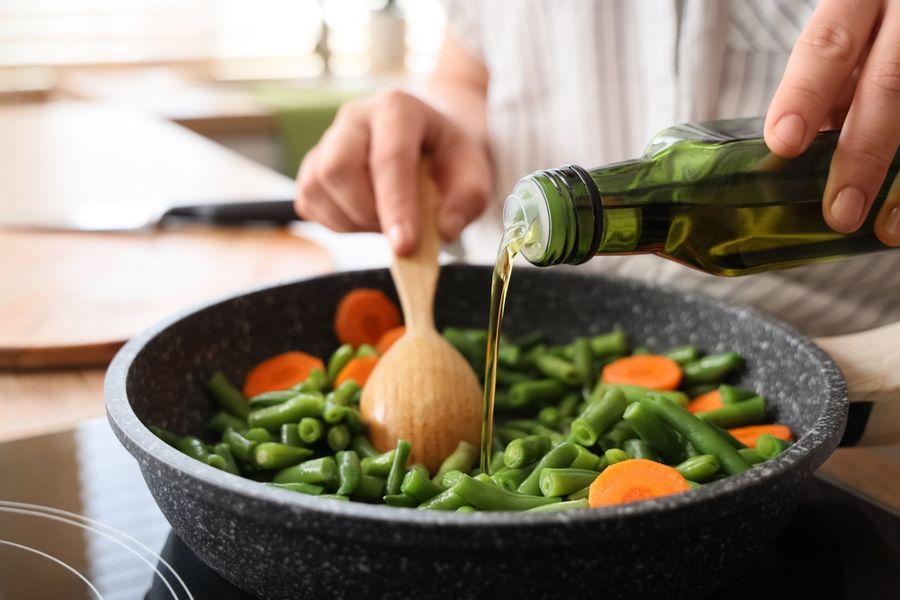
Cooking oil seems like a small choice—until you realize it can shape the flavor of your food, the stability of your cooking, and the type of fats you eat most often. Some oils stay steady at high heat and support heart health, while others break down quickly or add more saturated fat than most people realize. The good news is you don’t need a pantry full of fancy bottles. A few smart staples can cover nearly every recipe and keep everyday meals feeling both satisfying and balanced.
What Makes a Cooking Oil “Healthy” in the First Place
A healthy cooking oil usually checks three boxes: it has a favorable fat profile, it stays stable when heated, and it fits your cooking style. Oils higher in monounsaturated fats, like olive and avocado oil, tend to be associated with heart health and lower inflammation. Polyunsaturated fats can also be beneficial, especially when they replace saturated fat, but they can be more sensitive to heat depending on the oil.
Stability matters because overheating oil past its smoke point can cause it to degrade, producing off-flavors and unwanted compounds. Smoke point isn’t the only factor, but it’s a helpful guideline. The healthiest approach is using the right oil for the right job: low heat, high heat, baking, or finishing. When you match the oil to the cooking method, you get better taste and better performance.
Extra-Virgin Olive Oil: The Everyday Gold Standard
Extra-virgin olive oil is one of the most widely recommended oils for daily cooking, and it’s earned that reputation. It’s rich in monounsaturated fats and contains plant compounds like polyphenols, which have antioxidant and anti-inflammatory properties. That’s part of why olive oil is often linked to better heart health outcomes and overall longevity in Mediterranean-style diets.
It’s also surprisingly versatile. Extra-virgin olive oil works well for sautéing, roasting, baking, and salad dressings, with a smoke point that generally falls between 350 and 410°F, depending on the type. For high-heat searing, many people prefer a more refined olive oil, but extra-virgin is still a strong option for most home cooking. Keep one bottle for cooking and another nicer one for drizzling and dressings.
Avocado Oil: Best for High Heat With a Neutral Flavor
Avocado oil is a great option when you want something with a higher smoke point and a mild, neutral taste. It’s high in monounsaturated fats, similar to olive oil, and it also contains antioxidants that help keep it stable when heated. That combination makes it a popular choice for stir-frying, pan-searing, grilling, and roasting at higher temperatures.
Many avocado oils have smoke points above 480°F, making them one of the most heat-friendly oils in a healthy kitchen. Another advantage is flavor: it won’t overpower delicate foods the way olive oil sometimes can. If you like cooking a wide variety of cuisines—Asian, Mexican, Mediterranean, or classic American—avocado oil plays nicely with everything. It’s more expensive, but you don’t need to use it for every meal to benefit from having it on hand.
Canola and Safflower: Practical Oils That Still Fit a Healthy Diet
Canola oil gets a lot of criticism online, mostly because it’s categorized as a “seed oil,” but the research doesn’t support the idea that it’s inherently inflammatory. Canola is low in saturated fat and provides polyunsaturated fats, including some omega-3s. It’s also affordable, widely available, and has a neutral flavor, which makes it easy to use for everyday cooking.
Safflower oil is another neutral option with a high smoke point, making it useful for baking, roasting, and stir-frying. It contains a mix of fats, often higher in polyunsaturated fat, especially linoleic acid. Both oils can be part of a balanced diet, especially when they replace butter, shortening, or oils high in saturated fat. The key is storage and freshness—oils can go rancid over time, so buy what you’ll realistically use and store it away from heat and light.
Oils to Use Sparingly: Low Smoke Points and High Saturated Fat
Some oils are healthy in theory but not ideal for cooking. Flaxseed oil and walnut oil are good examples. Both contain beneficial fats and are often praised for their nutrition, but they have low smoke points, meaning they break down quickly when heated. That makes them better suited for salad dressings, smoothies, or finishing a dish after cooking.
Other oils should be limited for different reasons. Palm oil is high in saturated fat compared to most plant oils, and high saturated fat intake is linked to increased heart disease risk for many people. It also comes with environmental concerns tied to production. Coconut oil often falls into the same “use occasionally” category. It’s trendy and flavorful, but it’s also high in saturated fat, making it more of a specialty ingredient than a daily staple.
Smart Oil Habits: Storage, Smoke Points, and Reusing Oil
Even the healthiest oil can become less healthy if it’s mishandled. Oils deteriorate when exposed to heat, light, and air, which is why a bottle left near the stove often goes rancid faster. Store oils in a cool, dark cabinet, and choose dark glass bottles or tins when possible. Avoid buying huge quantities unless you cook often enough to use them within a reasonable time.
It also helps to respect smoke points and avoid overheating oil. When oil starts smoking, it’s a sign it’s breaking down. Turn the heat down, discard it if needed, and start fresh. Reusing heated oil repeatedly can also create unpleasant flavors and reduce stability. If you do fry foods occasionally, use an oil suited for high heat and don’t keep the used oil for multiple rounds. A few simple habits keep your oils tasting better and performing better.
Building a Healthier Oil Pantry Without Overcomplicating It
A healthy kitchen doesn’t need 12 different oils—it needs a few reliable ones used with intention. Extra-virgin olive oil covers everyday cooking and adds flavor, avocado oil handles high heat, and a neutral oil like canola or safflower fills in the gaps for baking or budget-friendly meals. Then you can keep one or two specialty oils, like walnut or flaxseed, for cold uses when you want extra nutrition or a richer taste.
The most important “healthy oil” choice is consistency. When most meals are cooked with stable oils that support heart health, and high saturated fat oils are treated as occasional ingredients, you get the benefits without feeling restricted. Your cooking stays flavorful, your pantry stays simple, and your meals stay easy to enjoy.