

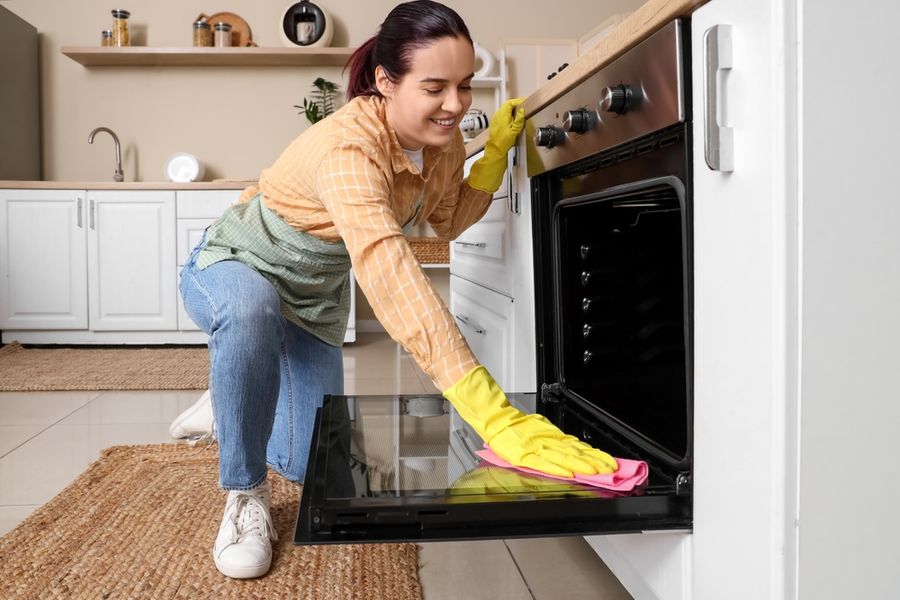
Opening the oven to a wave of burnt smells and greasy buildup can make even the most motivated home cook hesitate. Traditional oven cleaners often come with overpowering fumes that linger long after the job is done. Fortunately, a sparkling oven doesn’t require harsh chemicals or high-heat self-clean cycles. With a few pantry staples and a little patience, it’s possible to break down grime safely and restore freshness without filling the kitchen with smoke or chemical odors.
Skip the Self-Clean Setting and Empty the Oven First
Many ovens come with a self-clean function, but high-heat cycles can produce strong odors and even trigger smoke alarms. Older appliances may struggle with the extreme temperatures, making natural methods a safer choice. Starting with a completely cool oven creates a safer environment and prevents burns.
Remove oven racks, thermometers, pizza stones, and any loose debris before beginning. Taking everything out allows better access to corners and greasy spots. Laying down old towels or newspaper around the base of the oven can catch drips and make cleanup easier. Preparation may feel simple, but it sets the stage for a more thorough and efficient cleaning process.
Make a Baking Soda Paste to Break Down Grime
Baking soda is a powerful yet gentle cleaner that helps loosen baked-on grease. In a small bowl, mix about half a cup of baking soda with a few tablespoons of water until it forms a thick, spreadable paste. The consistency should resemble frosting—easy to apply but not runny.
Wearing gloves can make the process more comfortable and help spread the paste evenly across interior surfaces. Coat the oven walls, floor, and door, avoiding direct contact with heating elements. As the paste sits, it absorbs grease and begins to soften hardened residue. Areas with heavy buildup may require a slightly thicker layer for better results.
Let the Paste Sit Overnight for Maximum Effect
Patience plays a key role in natural oven cleaning. Allowing the baking soda paste to sit for at least 12 hours gives it time to penetrate stubborn grime. During this period, the paste may darken as it pulls grease from the oven’s surfaces.
While waiting, turn attention to the oven racks. Soaking racks in warm, soapy water in a bathtub or large basin can help loosen residue. A soft brush or non-abrasive sponge works well for scrubbing without scratching. Tackling racks separately makes the overall cleaning process feel more manageable and ensures no component gets overlooked.
Wipe Away Residue and Use Vinegar to Finish
After the paste has rested overnight, use a damp cloth to wipe away as much dried baking soda as possible. A plastic or silicone spatula can gently lift stubborn patches without damaging surfaces. Working slowly and methodically helps remove loosened debris effectively.
Once most residue is gone, fill a spray bottle with white vinegar and lightly spritz areas where baking soda remains. The vinegar reacts with the baking soda, creating a gentle foaming action that helps lift remaining grime. Wipe everything down again with a damp cloth until surfaces are clean and free of residue. The result is a refreshed oven without harsh fumes.
Try Steam Methods for Light Maintenance
For lighter cleaning sessions, steam can loosen grease naturally. Placing a baking dish filled with water and a cup of white vinegar inside the oven and heating it to 350°F creates steam that softens buildup. After turning off the oven and allowing it to cool slightly, wiping down surfaces becomes much easier.
Lemon steam offers a similar method with a fresh scent. Squeezing two lemons into a pan of water and heating it produces steam that cuts through grease while leaving a pleasant citrus aroma. Steam methods work best for maintenance between deeper cleans and help prevent heavy buildup from returning.
Maintain a Cleaner Oven With Simple Habits
Preventing future grime reduces the need for intense scrubbing. Wiping up spills once the oven cools keeps residue from hardening. Placing a baking sheet under dishes prone to bubbling over can catch drips before they reach the oven floor.
Regular light cleaning, even once a month, prevents grease from accumulating. A quick vinegar spray and wipe-down can maintain freshness between deep cleans. Consistent upkeep not only keeps the oven looking better but also prevents smoke and odors during cooking.
A Fresher Kitchen Without Harsh Chemicals
Cleaning an oven naturally relies on simple ingredients like baking soda, vinegar, and lemons. Allowing time for the paste to work, using steam for lighter sessions, and wiping surfaces regularly can keep buildup under control. The process may take a little patience, but it avoids the overpowering fumes associated with chemical cleaners.
A clean oven improves both cooking performance and kitchen air quality. With gentle methods and consistent maintenance, it’s possible to maintain a sparkling interior while keeping the home environment healthier and more comfortable.