

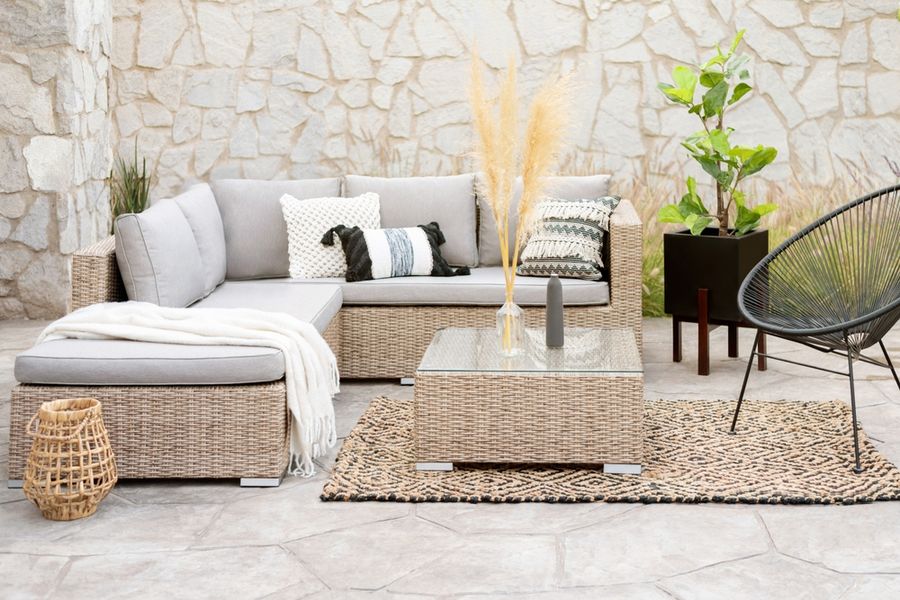
Outdoor furniture helps transform a patio or deck into a true living space, but constant exposure to sun, rain, and temperature swings can take a toll. Fading fabrics, rust spots, mildew, and worn finishes often happen gradually, making damage easy to overlook until it’s too late. With regular care and a few protective habits, outdoor pieces can stay comfortable and attractive for many seasons. Consistent maintenance not only protects the investment but also keeps outdoor spaces looking inviting year-round.
Deep Clean at Least Twice a Year
Outdoor furniture benefits from a thorough cleaning at least twice a year. Once in spring, before heavy use begins, and again in fall, before storage or winter weather sets in. Regular weekly wipe-downs help, but deep cleaning removes built-up grime, pollen, and residue that can damage finishes over time.
A simple solution of mild dish soap and warm water works for most materials. Use a soft-bristle brush or sponge to scrub gently, then rinse with clean water and pat dry with a lint-free cloth. Avoid harsh chemicals, chlorine bleach, pine oil, or abrasive cleaners unless specifically recommended by the manufacturer. Testing any new cleaner on a hidden spot first helps prevent unexpected discoloration or damage.
Care for Wood Furniture to Prevent Fading and Rot
Wood furniture can last for years when properly maintained. Many outdoor woods are naturally resistant to decay, but they still benefit from regular cleaning and occasional sealing. Dirt and moisture trapped on the surface can encourage mildew growth, so routine washing with mild soap and water keeps the wood in better condition.
After cleaning, applying a water-repellent preservative or penetrating semitransparent stain helps protect against ultraviolet rays and moisture. Depending on exposure, resealing may be needed every one to three years. If the wood develops mildew, an oxygen bleach solution (never chlorine bleach) can help remove stains without damaging the fibers. Light sanding along the grain can refresh surfaces before resealing.
Prevent Rust and Damage on Metal Furniture
Metal furniture is durable but can develop rust if the protective finish is chipped or worn. Aluminum resists rust better than iron or steel, but all metal pieces should be inspected regularly. Washing metal furniture with mild soap and water helps prevent grime buildup that can trap moisture against the surface.
If rust spots appear, soaking the area with white vinegar and gently scrubbing with a soft brush can help remove corrosion. After cleaning, applying a quality liquid or paste auto wax—if approved by the manufacturer—adds an extra layer of protection. Inspect joints, hidden areas, and hardware periodically, as rust often begins in spots that aren’t immediately visible.
Keep Outdoor Fabrics Clean and Protected
Outdoor cushions and performance fabrics are designed to resist moisture and fading, but they still require care. Brush off dirt regularly and wipe spills promptly with mild soap and water. Removable covers can often be machine-washed on a gentle cycle using mild detergent and air-dried to maintain their shape and durability.
For cushions without removable covers, spot cleaning with a soft brush and soap solution works well. Rinse thoroughly and allow cushions to dry completely in a well-ventilated area. Applying a fabric protector once a year can help restore water repellency when moisture no longer beads on the surface. Keeping fabrics clean prevents mildew and extends their lifespan.
Protect Furniture From Sun, Rain, and Snow
Even the most durable outdoor furniture benefits from protection during extreme weather. Protective covers shield surfaces from UV rays, dirt, and heavy rain. While covers may not always be visually appealing, they significantly reduce fading and cracking caused by constant sun exposure.
In regions with harsh winters or heavy snowfall, storing furniture in a shed, garage, or storage unit can dramatically extend its life. If indoor storage isn’t possible, remove cushions and store them in a weatherproof cabinet or deck box. Keeping furniture upright and allowing water to drain prevents pooling that can lead to long-term damage.
Inspect, Rotate, and Maintain Small Details
Small maintenance habits can prevent bigger problems later. Rotate cushions regularly to avoid uneven fading and wear. Tighten screws and bolts periodically, especially on frequently used chairs and tables. Placing furniture on level ground reduces stress on joints and frames, which helps prevent structural issues.
Lubricating moving parts such as swivel chairs or umbrella mechanisms with a silicone spray keeps them functioning smoothly. Wiping away sunscreen residue from plastic or resin furniture prevents discoloration. Addressing minor issues early (like chipped paint or loose hardware) keeps furniture sturdy and looking fresh rather than worn and neglected.
Furniture That Looks Good Year After Year
Outdoor furniture lasts longer when care becomes routine rather than reactive. Deep cleaning in spring and fall, combined with gentle weekly maintenance, prevents grime buildup and protects finishes. Wood benefits from sealing, metal requires rust checks, and fabrics stay fresher with regular washing and protective treatments.
Protective covers and seasonal storage add another layer of defense against sun and severe weather. Small habits, like tightening hardware, rotating cushions, and keeping surfaces dry, help preserve both appearance and structure. With consistent attention, outdoor furniture can remain comfortable, durable, and stylish for many years of outdoor living.